
Our Blog
Looking for bright ideas?
Right this way.
What Is Permanent Roofline Lighting?
A Northern Virginia Homeowner’s Guide to Year-Round Lighting
Every season I get the same message. Usually from someone in Gainesville or Haymarket, sometimes from over in Warrenton. It goes something like this: “I drove past a house the other night and there were lights running along the whole roofline. Just white. Clean looking. Not Christmas-y at all. What is that?”
I love getting that message. It means someone is paying attention.
What they’re seeing is permanent roofline lighting. And if you’ve been noticing it more on homes in Northern Virginia over the past year or two, you’re not imagining things. It’s one of the fastest-growing home upgrades in this area, and I think it’s worth taking some time to actually explain what it is, how it works, and whether it makes sense for your home.
I’ll try to give you the same honest answer I’d give a neighbor asking over the fence.
So What Is Permanent Roofline Lighting, Exactly?
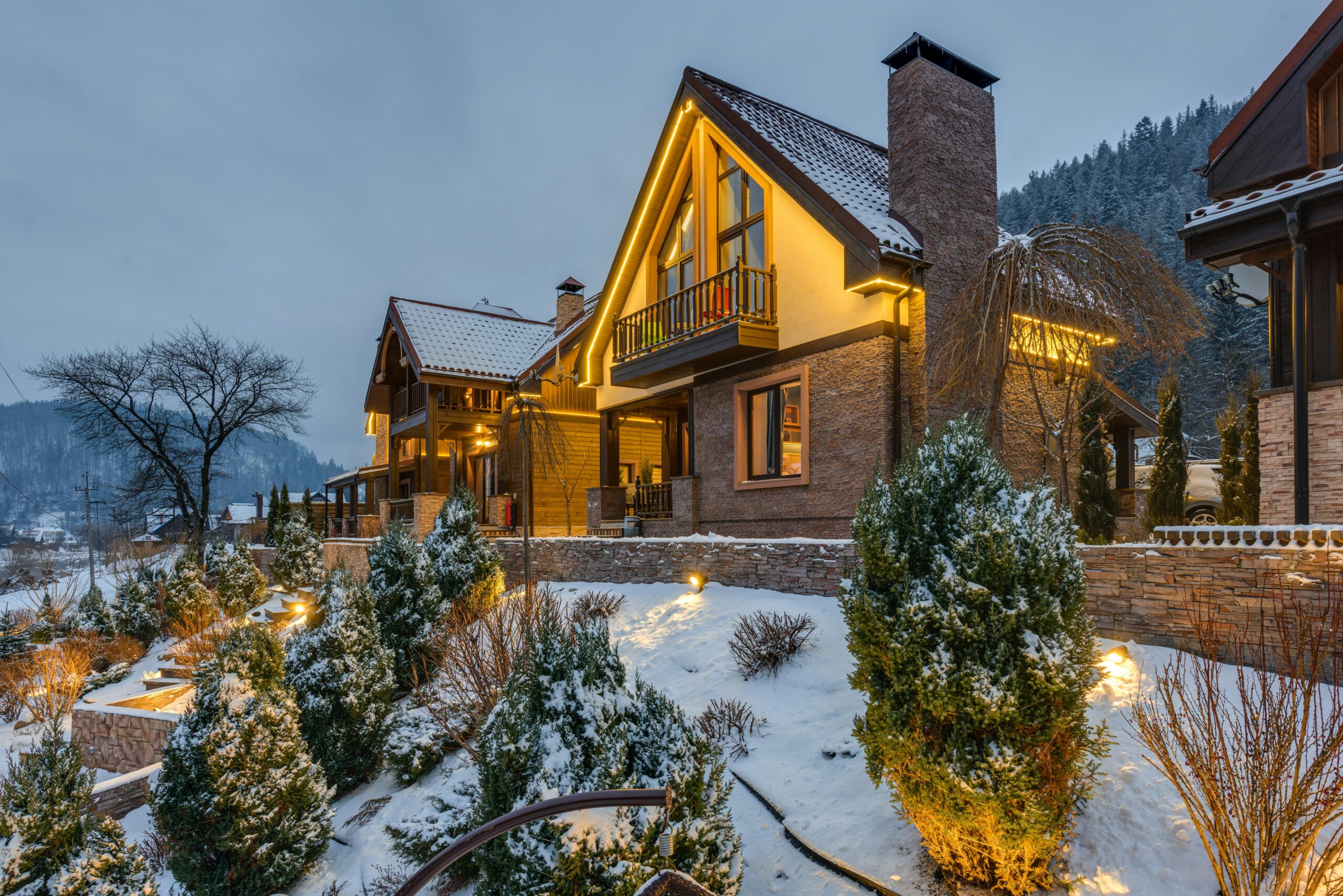
Permanent roofline lighting is a system of small LED lights that gets installed directly into the soffit or eave of your home. Unlike seasonal Christmas lights that clip onto your gutters and come down every January, this system stays up year-round. The lights sit flush with the trim, tucked up under the edge of the roofline, and when the system is off, you barely notice they’re there.
The lights themselves are housed in a low-profile aluminum channel that gets color-matched to your home’s exterior. Wires run through the channel and, where possible, through the attic so there’s nothing hanging on the outside of the house. The result is a clean, built-in look, not something that looks like it was put up last November and forgotten.
From the street, a well-installed permanent lighting system looks like part of the house. That’s the point.
The system connects to a controller that you run from your phone. You can set timers, adjust brightness, change colors, or switch scenes entirely. One tap and your home goes from a soft warm white for a Tuesday night to red, white, and blue for the Fourth of July. A few seconds and you’re back to the everyday setting.
How Is This Different from Regular Christmas Lights?
This is the question I get most often, and it’s worth answering carefully because the difference is significant.
Traditional holiday lights, the kind we install every fall and take down every January, are a seasonal decoration. The lights are hung on clips that attach to your gutters. They go up in October or November, they come down after the holidays, and they go into storage until the following year. Every season, we start fresh.
Permanent roofline lighting is a fixture. It’s installed once, the same way you’d install an outdoor light or a ceiling fan. The hardware is rated for full outdoor exposure in every season, including the hot Virginia summers and the ice we get in January. A quality system is built to last ten or more years with minimal maintenance.
The other big difference is what you can do with it. Seasonal lights are one setting: whatever you put up. Permanent systems are fully programmable. You can run warm white every night for curb appeal and security. You can flip to green for St. Patrick’s Day. You can run a slow blue-white pulse for a dinner party on the patio. You can schedule the lights to come on at sunset and shut off at midnight automatically, every night, without touching anything.
They’re different products solving different problems. Some of our customers have both.
What Does the Installation Look Like?
I want to be straightforward about this because I think some people expect a simple swap-out, and it’s a bit more involved than that.
A permanent lighting installation is a real construction job, done once, done right. Here is what the process looks like when we work with a homeowner in Prince William County or Fauquier County.
We start with an estimate. Because this system gets installed into your home’s structure, we do an in-person consultation. We walk the roofline, look at the soffit material, assess how wiring can be routed, and talk through what you’re trying to accomplish. We take measurements. We talk colors, both for the track and for the lights themselves. We talk through the areas of the home you want covered, because not every home needs lights on all four sides.
Once the design is approved and the quote is accepted, we schedule the installation. The crew mounts the aluminum track along the eave, runs wiring through the soffit and into the attic where possible, installs the lights into the track, and connects everything to the control system. For a typical single-family home, the installation takes most of a day.
After installation, we walk the system with you. We make sure you’re comfortable with the app, you understand the timer settings, and everything looks right from the street. Before we leave, the system should feel like yours.
If anything needs adjustment down the road, we’re local. You’re not calling a national company’s 800 number.
What Does a Home Actually Look Like with Permanent Lighting?
During the day, honestly, not that different from before. The track is subtle. On most homes, you have to know where to look to notice it. That’s intentional. You don’t want a visible hardware installation competing with your home’s architecture.
At night, it depends entirely on what you choose to do with it.
Most of our customers run a warm white setting on a nightly timer. The effect is a soft, even glow along the roofline that defines the shape of the house and adds depth and presence. It makes the home look finished in a way that’s hard to describe until you see it from the street. Other homes with similar architecture just look flat by comparison.
During the holidays, the same system becomes a full Christmas display. You can program patterns, control brightness, and run colors across the whole spectrum. No ladder. No untangling. No driving to the hardware store because a strand stopped working. You open the app and turn it on.
For special occasions, the options open up further. We have customers who run school colors for a graduation party, blue for a law enforcement appreciation night, or just a soft amber for outdoor dinner events. The system you install once becomes something you use all year in whatever way fits your life.
Is This Just for Christmas?
No. And honestly, that’s part of what makes it worth the investment.
When most people first hear “permanent Christmas lights,” they picture December. They wonder why they’d pay for a system they only use six weeks a year. That’s a fair question, and it points to a real misconception about what these systems are.
Permanent roofline lighting is not a holiday product with year-round hardware. It’s a home lighting upgrade that happens to be spectacular for the holidays.
Think about it this way. You have outdoor lighting on your porch, your garage, maybe your walkway. That lighting does something practical: it makes your home visible, welcoming, and safer at night. Permanent roofline lighting does all of that and more. It gives you architectural definition. It makes your home look intentional from the street every single night.
Some of our customers genuinely forget it’s “holiday lighting” by spring. They’ve settled into running a soft white or warm gold every evening, and it’s just how their house looks now. The Christmas colors in December are almost a bonus at that point.
The homeowners who get the most out of permanent lighting are the ones who treat it as a year-round feature from day one, not a holiday decoration they’re willing to leave up permanently.
Is Permanent Roofline Lighting Right for Your Home?
Here’s my honest take.
If you own your home, care about how it looks from the street, and are tired of the annual ladder ritual, permanent lighting is worth a serious look. The investment is real, but so is the result. You pay once for a system that runs for years without the seasonal hassle.
If you rent, or if you’re planning to move in the next year or two, it probably doesn’t make sense. This is a home improvement, not an accessory.
If you live in a community with an HOA, that’s worth checking before you get too far into the planning. Most HOAs in Prince William County and Fauquier County treat permanent lighting as an architectural modification, which means it typically needs ARC approval. We’ve helped homeowners navigate that process many times. A professionally installed system with hidden wiring and a color-matched track tends to be a much easier sell to an HOA than DIY light strings hanging from gutters.
If you’ve been on the fence, the best thing to do is get an estimate. It costs nothing, and you’ll know exactly what the installation would involve for your specific home.
Common Questions About Permanent Roofline Lighting
How long does a permanent lighting system last?
A quality system installed by a professional crew should last ten or more years. The LED lights themselves are rated for tens of thousands of hours of use, and the aluminum track is built for full outdoor exposure. Minimal maintenance is required beyond keeping gutters clear.
How much electricity does it use?
Less than you’d think. LED roofline lighting is significantly more efficient than traditional incandescent strings. Most homeowners running their system on a nightly timer see a very modest increase in their electric bill. The efficiency gap compared to the box-store lights people used to use is substantial.
Will my HOA approve it?
Many do, especially for professionally installed systems with concealed wiring and color-matched hardware. We can help you prepare the documentation an ARC typically wants to see. It’s worth asking before assuming the answer is no.
Can the lights be used for holidays other than Christmas?
Yes. These systems give you access to a full color range through the app. Most of our customers use their lights for the Fourth of July, Halloween, St. Patrick’s Day, sports seasons, and various family occasions throughout the year.
Do I need to be home for the installation?
We prefer you’re available for the walkthrough at the end so we can confirm everything looks right and make sure you’re comfortable with the system. For the bulk of the installation day, you don’t need to be home.
Ready to See What It Looks Like on Your Home?
If you’ve made it this far, you’re probably already thinking about it. The next step is simple.
We offer free in-person estimates for permanent lighting in Prince William County, Fauquier County, and the surrounding Northern Virginia area. We’ll come out, walk your home, and give you a clear picture of what the system would look like, what it would cost, and what the process involves. No pressure, no obligation.
